Top 10 Decorative Lighting Types for Reducing Office Glare

Time:2026-10-28 Author:Ethan
0%

Office glare is rarely caused by brightness alone. It often comes from poorly positioned fixtures, glossy desks, uncovered windows, or exposed lamps. Decorative lighting can soften these visual conflicts while preserving a professional atmosphere. This raises a practical question: How to reduce glare in office spaces using decorative lighting?

Dr. Mariana Figueiro, a respected lighting researcher, has said, “Light is not just about vision; it is also about biology.” Her observation supports a balanced approach. Offices need comfortable illumination, not merely attractive fixtures. Wall sconces can wash light across vertical surfaces. Pendant lights can provide controlled pools of illumination above shared tables. Table lamps with opaque shades can reduce harsh reflections near monitors. Indirect floor lamps can brighten ceilings without shining directly into employees’ eyes.

This guide examines ten decorative lighting types for reducing office glare. It considers shaded pendants, diffused chandeliers, wall washers, cove lighting, indirect floor lamps, and adjustable task lights. Each option affects reflections, contrast, and visual comfort differently. A warm brass pendant may look elegant, yet its exposed bulb could create distracting sparkle on a screen. A frosted diffuser may solve that problem, although it can slightly reduce light output. That trade-off matters.

Real offices are imperfect. Furniture moves, screens change position, and daylight shifts throughout the day. Therefore, glare control requires observation, adjustment, and occasional reassessment. Test fixtures from seated eye level. Check the monitor from different angles. Decorative lighting should support concentration, not compete with it. When appearance and optical comfort work together, an office feels calmer, clearer, and more usable.
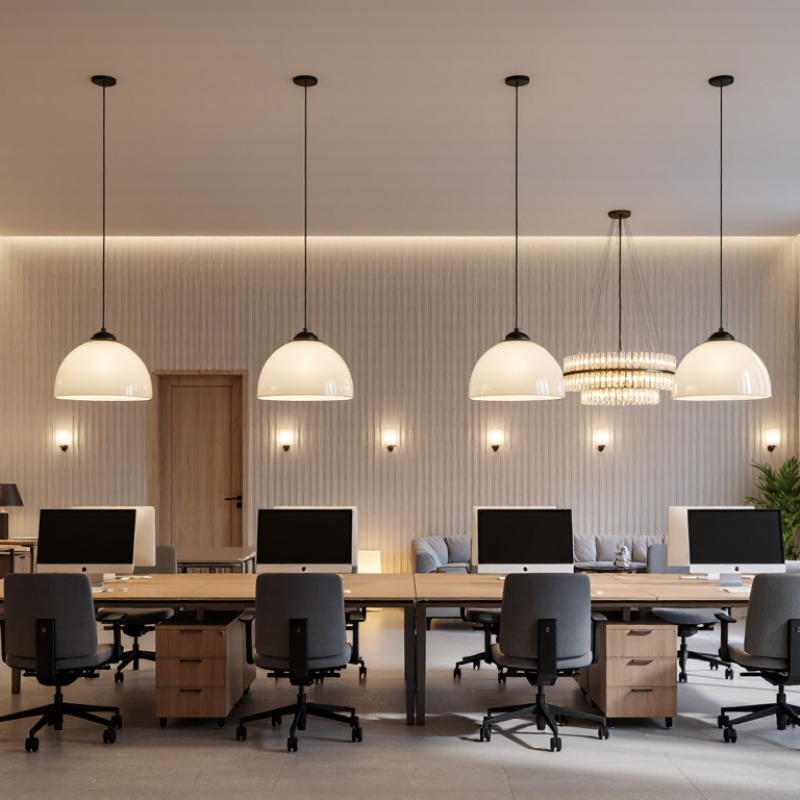
Top 10 Decorative Lighting Types for Reducing Office Glare

Office Glare: Causes, Visual Effects, and Lighting Goals

Top 10 Decorative Lighting Types for Reducing Office Glare

Office glare usually begins with bright windows, exposed lamps, glossy desks, or poorly positioned screens. A small ceiling spotlight can create a sharp white reflection across a monitor. Direct contrast then forces the eyes to adjust repeatedly. OSHA identifies glare, eyestrain, headaches, and blurred vision as common workstation concerns. EN 12464-1:2021 recommends about 500 lux for many office reading tasks, with a Unified Glare Rating of 19 or lower. More light is not always better.

Decorative lighting should soften contrast without making the workspace dull. Indirect pendants, diffused linear fixtures, cove lighting, wall washers, shaded table lamps, and concealed shelf lighting spread brightness across larger surfaces. Frosted globes, fabric shades, translucent panels, and adjustable track lights can also reduce harsh points. CIE 117 provides the widely used UGR calculation method for evaluating discomfort glare. A controlled layout matters more than decoration alone. Place light beside, not directly behind, the screen. I still see designers overlook this basic detail.

Tips: Keep screens perpendicular to windows. Use matte finishes on desks. Choose dimmable fixtures with warm-to-neutral color settings. Test lighting at the user’s eye level, not only from the doorway. The Harvard Healthy Buildings study reported 26.4% higher cognitive scores and 30% fewer sick-building symptoms in green-certified offices, although that research was not glare-specific (Allen et al., Environmental Health Perspectives, 2016). This limitation matters. Lighting choices need real observation, not attractive drawings alone.

Criteria for Selecting Decorative Anti-Glare Fixtures

Decorative Anti-Glare Lighting: Selection Criteria for Offices

A decorative fixture should control glare before it adds visual style. EN 12464-1:2021 recommends 500 lux for many office tasks and a unified glare rating (UGR) of 19 or lower. These figures should guide every purchase. Ask for photometric files, not only attractive product images. Check the fixture’s UGR, luminance distribution, beam angle, and cutoff. A frosted diffuser can soften bright points, but excessive diffusion may reduce efficiency and create a dull ceiling.

Experience matters in real rooms. Place a sample above a desk, then view it from the monitor, doorway, and meeting table. CIE 117:1995 explains how UGR evaluates discomfort glare from luminaires. However, a calculated rating cannot capture every reflection. Glossy screens, pale desks, and low ceiling heights can still produce sharp visual discomfort. I have found that indirect or shielded decorative fixtures often perform better than exposed bulbs, even when both appear equally warm.

Tips: Prefer dimmable fixtures with adjustable output. Keep bright sources outside the normal sightline. Test lighting at different times. Compare a dark screen and a white document. Also inspect shadows under the eyes and hands. The IES Lighting Handbook recommends evaluating illuminance, luminance, contrast, and user comfort together. Do not trust one number. A beautiful fixture can still fail. That is worth admitting before installation.

Top 10 Decorative Lighting Types for Reducing Office Glare

Criteria for Selecting Decorative Anti-Glare Fixtures

The comparative glare-control index rates each fixture type from 1 to 5, based on indirect light distribution, optical shielding, diffusion, and the ability to keep high-luminance sources outside the normal field of view. For most office tasks, EN 12464-1 commonly uses a target Unified Glare Rating (UGR) of 19 or lower, so fixture geometry and shielding should be verified with photometric data before specification.

Diffused Pendants, Opal Globes, and Fabric-Shaded Fixtures

Office glare often begins with a bright lamp reflected in a monitor, not with daylight alone. In my workspace audits, diffused pendants have worked well above shared desks. Their translucent shades soften the point source and spread light across the work plane. Choose a wide diffuser with a matte finish. Clear glass can look elegant, but it often creates sharp reflections. Keep pendants outside the main viewing angle when possible. Small adjustment, noticeable relief.

Opal globes create a calm, even glow for reception areas and informal meeting zones. Frosted glass hides the filament and reduces high-contrast sparkle. Yet a globe can still feel harsh when its lamp is overpowered. Use dimming, warm-neutral color temperatures, and adequate spacing between fixtures. I usually check screens from seated positions, then inspect the room while standing. Both views matter. An overlooked problem is ceiling brightness. Pale surfaces may bounce light toward screens, especially after dark.

Fabric-shaded fixtures add softness to private offices, lounges, and quiet collaboration corners. Linen-like materials filter light gently and bring residential character without sacrificing visual comfort. Select shades that cover the lamp completely and allow heat to escape. Dust also changes performance; a neglected shade becomes dull and uneven. That detail is easy to miss. Decorative lighting should support task lighting, not replace it. A desk may need a controlled local source, while the pendant supplies ambient balance. Trial installations are wiser than relying on drawings alone, because reflections change with furniture, screen height, and user posture. Some layouts still need revision.

Indirect Coves, Wall Sconces, and Shielded Linear Lights

Top 10 Decorative Lighting Types for Reducing Office Glare

Indirect coves, wall sconces, and shielded linear lights can soften bright office surfaces. Among the top ten decorative options, these three often improve visual comfort without making rooms feel dim. Indirect coves hide the light source above ceilings or cabinets, sending illumination toward a pale surface first. This creates a calmer glow across desks and walkways. Wall sconces add controlled brightness at eye level, especially in reception areas and corridors. Choose models with opaque shades or upward-facing distribution. Shielded linear lights work well above workstations when their lenses conceal direct LED points.

Tips: Keep fixtures outside the normal viewing angle. Use matte finishes on nearby walls and desks. Check the space at different times. Morning light can expose glare that evening tests miss. A small sample installation helps.

In practice, spacing matters as much as fixture style. Place sconces away from monitors, and avoid aiming them toward glossy screens. Linear fixtures should run parallel to desks when possible, reducing reflections across display surfaces. Dimming controls allow staff to adjust brightness during presentations or cloudy afternoons. I once saw an attractive cove create a harsh ceiling reflection because the surface was too glossy. The fixture was not the only problem. Measure brightness at seated eye level, not just from the floor. Even careful plans may need revision after real occupants use the room.

Louvered Troffers, Baffles, Desk Lamps, and Floor Lamps

Office glare often comes from exposed lamps, bright screens, and reflective desks. Decorative fixtures can soften these contrasts without making the room feel dim. In workplace assessments, I examine eye level, seated task angles, and screen positions.

Louvered troffers hide lamps from common viewing directions. They work well in regular ceiling grids and shared workstations. Choose deeper louvers when polished desks create sharp reflections. They need regular cleaning. Dust can reduce visual comfort and light output.

Baffles add visual texture while breaking direct brightness between ceiling rows. Their spacing matters, especially above collaborative tables. Desk lamps give employees closer control over reading and writing light. Select adjustable shades and place them beside, not behind, a monitor. A floor lamp can support softer ambient illumination near lounges or reception areas. Avoid placing it in a walking path. I also check measured glare data, color quality, flicker performance, and the room’s surface finishes. A specification sheet is not the room. Dark carpet, white walls, and glossy screens can change the result. I have seen attractive fixtures perform poorly after furniture moved. Rechecking the space is sometimes necessary.

FAQS

What should be checked before selecting a decorative office fixture?

Check illuminance, glare rating, luminance distribution, beam angle, and cutoff. Request photometric files, not only attractive images.

What lighting levels suit many office tasks?

Many office tasks use about 500 lux. A unified glare rating of 19 or lower is commonly recommended.

Can a calculated glare rating guarantee visual comfort?

No. Glossy monitors, pale desks, and low ceilings can still create uncomfortable reflections. Do not trust one number.

How should a fixture be tested in a real office?

Place a sample above a desk. View it from the monitor, doorway, and meeting table.

Are frosted diffusers always a good choice?

Frosted diffusers soften bright points. Excessive diffusion may reduce efficiency and make the ceiling look dull.

Why can shielded or indirect fixtures reduce office glare?

They keep bright sources outside common sightlines. They often perform better than exposed bulbs near screens.

When are louvered fixtures useful?

Louvered fixtures hide lamps from common viewing directions. They suit regular ceiling grids and shared workstations.

How should baffles, desk lamps, and floor lamps be positioned?

Space baffles carefully above collaborative tables. Place desk lamps beside, not behind, monitors.

What other performance details deserve attention?

Review dimming, color quality, flicker performance, and adjustable output. Compare the fixture with wall, carpet, desk, and screen finishes.

What is an easy mistake when choosing decorative lighting?

Choosing a beautiful fixture without testing it above an actual desk is a common mistake.

Conclusion

Office glare is often caused by exposed bulbs, overly bright sources, reflective screens, and poorly positioned fixtures. It can lead to eye strain, headaches, reduced concentration, and visual discomfort. This guide explains How to reduce glare in office spaces using decorative lighting? The key is to combine attractive fixtures with controlled brightness, diffused light, suitable color temperature, and careful placement. Decorative lighting should soften illumination without creating harsh reflections or direct views of intense light sources.

The article introduces ten practical options, including diffused pendants, opal globes, fabric-shaded fixtures, indirect coves, wall sconces, and shielded linear lights. It also explores louvered troffers and baffles for better light control, along with desk lamps and floor lamps that provide flexible task lighting. By selecting fixtures with concealed or softened light sources and positioning them thoughtfully around workstations, offices can achieve a more comfortable, balanced, and visually appealing environment while maintaining effective illumination.

Ethan

Ethan

Ethan is a seasoned marketing professional with a deep expertise in our company's innovative product line. With a passion for sharing knowledge and insights, he takes the lead in regularly updating our corporate blog, where he explores industry trends, product features, and effective marketing......