Choosing hotel lighting for 2026 means balancing energy use, guest comfort, safety, and maintenance across rooms that may operate around the clock. How to choose energy-efficient lighting for 24/7 hotel operations? Start by examining each space: a guest room needs calm, adjustable light, while a corridor needs dependable visibility through every shift. The right choice is rarely one lamp for every job.
Lighting researcher Dr. Mariana Figueiro has described light as “the primary synchronizer of the circadian system.” That insight matters in hotels, where guests arrive at all hours. Consider warm, dimmable bedside lighting, clear task light at desks, and carefully scheduled public-area lighting. Look for efficient LEDs with suitable color rendering, replaceable components, and controls that match real occupancy. A sensor should not leave a guest standing in a dark hallway. Small details count.
Compare total operating costs, not just purchase prices. Review wattage, expected lifetime, driver replacement, warranties, and control compatibility. Test a sample room before specifying fixtures across the property; a bright showroom can hide glare on a glossy desk or an unflattering mirror. Track energy use after installation and ask staff where controls cause friction. Some assumptions will be wrong. That is useful. A practical lighting plan leaves room to adjust schedules and settings as guest patterns change, while preserving reliable light for housekeeping, late arrivals, and overnight teams.
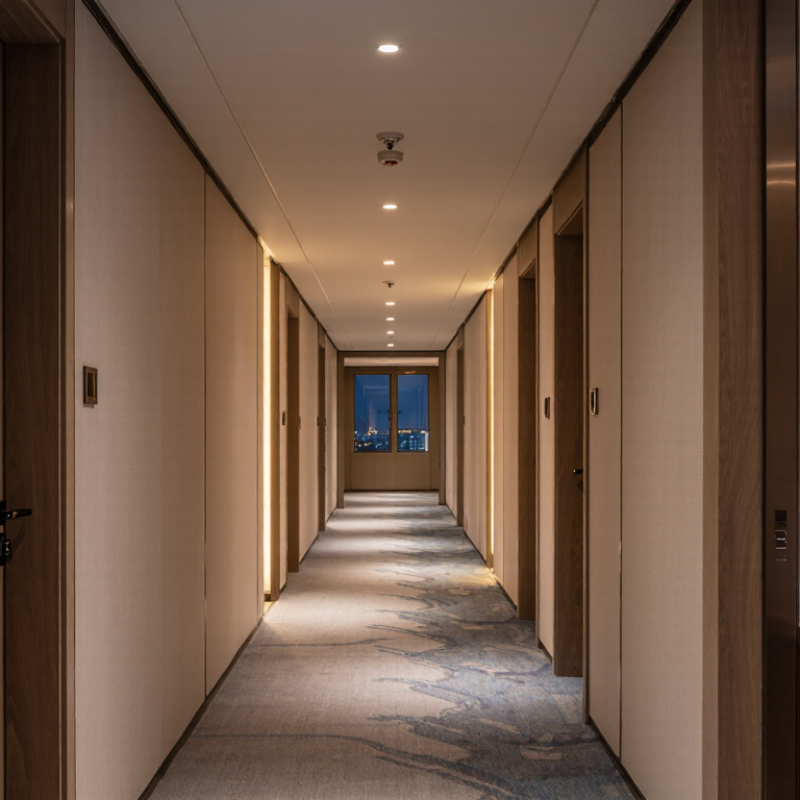
Assess Hotel Lighting Needs by Space and Operating Hours
How to Choose 2026 Best Energy Efficient Hotel Lighting?
Assess Hotel Lighting Needs by Space and Operating Hours
Start with a room-by-room audit, not a blanket replacement. Guest rooms need warm, dimmable light near beds and mirrors; corridors need steady, glare-controlled illumination overnight. Kitchens, laundry rooms, and back offices often run for long shifts, so efficient fixtures and occupancy controls can matter more there. The U.S. Energy Information Administration’s 2018 Commercial Buildings Energy Consumption Survey attributes about 17% of commercial-building electricity use to lighting. Hotels vary, though. Your own meter readings and schedules are more useful than a generic estimate.
Tips: Record lighting hours for one typical week. Note empty meeting rooms, sunlit lobby corners, and lights left on during room turnover. Compare measured use by area before choosing LEDs, sensors, or dimming controls. Check that controls do not leave staff working in unsafe or uncomfortable conditions. Small details count.
A 24-hour lobby has different needs from a guest room used briefly each evening. Prioritize spaces with long operating hours, then test changes in a few representative areas. Track electricity use and ask staff about glare, color, and dark spots. A lower wattage on paper can still feel wrong in practice; I have seen that mismatch get overlooked. Recheck settings after occupancy patterns change, especially during seasonal shifts.
Check Controls, Sensors, and Smart Lighting Compatibility
For a 2026 hotel lighting upgrade, check the control system before comparing fixture wattage. The U.S. Energy Information Administration’s 2018 Commercial Buildings Energy Consumption Survey attributes about 17% of commercial building site energy use to lighting. That makes controls a practical efficiency lever, not a decorative extra. Lawrence Berkeley National Laboratory’s 2012 meta-analysis found average occupancy-sensor savings of about 24%, though results differed by room type and study. Hotel rooms are not offices, so treat that figure as context, not a promise.
Check that LED drivers, dimmers, sensors, and gateways use compatible control protocols. A system may support dimming but still fail to communicate with the building’s schedules or room controls. Compatibility matters. In guest rooms, test vacancy settings while someone reads quietly in bed; poorly placed sensors can switch lights off at the wrong moment. In corridors, verify that occupancy triggers a smooth increase, not an abrupt glare.
Ask for a room mock-up before specifying the whole property. Test bedside switches, daylight response near windows, cleaning modes, and manual overrides. Confirm that staff can adjust settings without specialist software, and that the system reports faults clearly. One detail is easy to miss: curtains can block daylight sensors, while reflective surfaces can confuse them. A neat controls schedule on paper may still need revising after a few occupied-room trials.
Calculate Total Cost, Energy Savings, and Payback
For a 2026 hotel lighting upgrade, compare full project cost with realistic annual savings—not fixture prices alone. Include lamps or fixtures, installation labor, controls, disposal, and any room downtime. Then estimate energy use from wattage, operating hours, and your electricity rate. Check actual bills.
For example, replacing 100 fixtures rated at 30 watts with 12-watt models saves 1.8 kilowatts while they are on. At 10 hours daily and $0.15 per kilowatt-hour, estimated energy savings are about 6,570 kWh, or $986 per year. This assumes similar light levels and consistent use. Measure the space; guest rooms, corridors, and kitchens rarely follow identical schedules.
Add maintenance savings only when you can support them with service records. If fixtures and installation cost $10,000, energy savings alone suggest a simple payback of about 10 years. The formula is upfront cost divided by annual savings. That is only a starting point. I would not treat it as a promise: occupancy, dimming, failures, and energy prices can shift the result. Check light output, color quality, and glare before choosing a lower-wattage option. A spreadsheet is useful, but real operating data is better.
How to Choose 2026 Best Energy Efficient Hotel Lighting? — Calculate Total Cost, Energy Savings, and Payback
Illustrative comparison for a 100-room hotel guest-room lighting retrofit. Costs are planning estimates in USD, not supplier quotations.
| Lighting Option |
Power per Lamp |
Annual Energy Use |
Annual Energy Savings vs. Halogen |
Estimated Installed Cost |
Annual Electricity Cost |
Simple Payback vs. Halogen |
Estimated 5-Year Total Cost |
| Halogen reference case |
50 W |
87,600 kWh |
— |
$1,600 ($4 per lamp) |
$13,140 |
Reference |
$67,300 |
| Compact fluorescent (CFL) |
13 W |
22,776 kWh |
64,824 kWh (74%) |
$4,000 ($10 per lamp) |
$3,416 |
About 3.0 months |
$21,082 |
| LED retrofit — recommended for the modeled case |
7 W |
12,264 kWh |
75,336 kWh (86%) |
$5,600 ($14 per lamp) |
$1,840 |
About 4.2 months |
$14,798 |
Calculation assumptions: 100 guest rooms × 4 lamps per room = 400 lamps; 12 operating hours per day; 365 days per year; electricity price $0.15/kWh. Annual energy use = lamp count × watts × daily operating hours × 365 ÷ 1,000. Simple payback = additional upfront cost compared with halogen ÷ annual electricity-cost savings. Five-year total cost = estimated installed cost + five years of electricity costs. The five-year estimate excludes lamp replacements, maintenance, financing, taxes, demand charges, and changes in electricity prices. Actual results depend on occupancy, controls, existing fixtures, local energy tariffs, and installed product performance.
Verify Safety Standards, Durability, and 2026 Compliance
Choosing energy-efficient hotel lighting for 2026 means checking more than wattage. Ask suppliers for current safety certificates and test reports that match the exact fixture and its intended market. Confirm electrical, fire, and building requirements with qualified local professionals; requirements can differ by location and project type. A certificate for one component may not cover the complete fitting. Check it carefully.
Durability affects both guest comfort and operating costs. Review rated life, driver quality, heat management, and performance under frequent switching. In a corridor, a flickering lamp can disrupt sleep nearby and create maintenance calls at awkward hours. Small details matter. Ask how warranty terms handle drivers, controls, and early failures, then compare them with documented testing rather than estimates alone.
For 2026 compliance, verify the rules and effective dates that apply where the hotel operates. These may cover energy performance, lighting controls, emergency lighting, or product labeling. Request dated documentation, and confirm that proposed dimmers and sensors work with the fixtures. Keep the records. It is tempting to trust a polished specification sheet, but I would still check the model numbers against certificates and installation plans. A mismatch can be easy to miss during purchasing.
Conclusion
Choosing the best energy-efficient hotel lighting in 2026 starts with understanding how each space is used and how long its lights operate. Guest rooms, corridors, lobbies, kitchens, and service areas have different brightness, comfort, and scheduling needs. Compare LED options by energy efficacy, expected lifespan, and color quality so lighting feels welcoming while supporting visibility and daily tasks. For round-the-clock properties, ask: How to choose energy-efficient lighting for 24/7 hotel operations? Consider how occupancy sensors, dimming, timers, and smart controls can reduce unnecessary use without disrupting guests or staff.
Look beyond the purchase price to estimate installation costs, energy savings, maintenance needs, and payback over time. A well-planned system can lower operating expenses while maintaining consistent light quality. Before selecting products, verify that they meet relevant safety and performance requirements, can withstand the conditions of their intended locations, and align with applicable 2026 compliance expectations.
 Trandic Light
