Creating the perfect reading nook requires thoughtful lighting. One question often arises: “Where to place wall lamps for the best bedside reading experience?” According to Rachel Martin, a renowned interior designer, “Proper lamp placement can transform your reading experience from ordinary to extraordinary.”
The right wall lamp can illuminate your pages without disturbing sleep partners. Placing the lamp at eye level helps reduce glare. Aim for a spot where the light hits the book directly. Experimenting with different wall locations can yield great results.
Consider the size of your bed and the distance to your nightstand. A lamp positioned too far may create shadows. Conversely, placing it too close can be overwhelming. Reflecting on these details is crucial. Various angles matter in achieving the best lighting. A well-placed wall lamp not only enhances visibility but also adds aesthetic appeal to your bedroom.
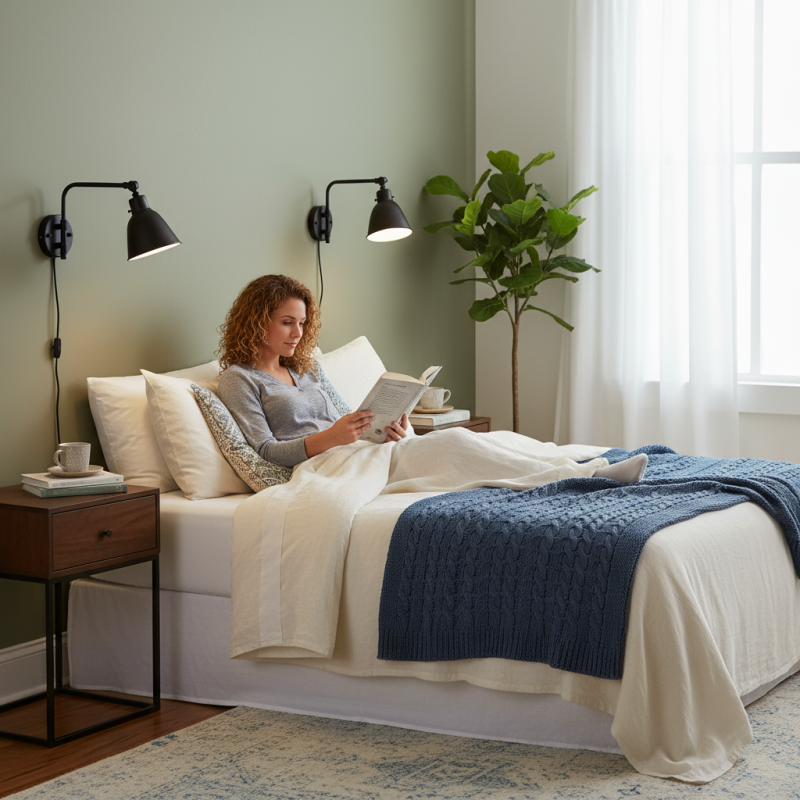
Choosing the right wall lamps for bedside reading can greatly enhance your nightly routine. Research shows that proper lighting improves reading comprehension by 45%. A wall lamp should provide adequate brightness without causing eye strain. Aim for a brightness level around 300 to 500 lumens for optimal reading conditions. This range ensures that the light is bright enough yet soft enough to avoid glare.
Consider the placement of your wall lamps. They should be positioned at eye level, about 40 to 60 inches from the floor. This height reduces shadows and provides an even distribution of light. Additionally, ensure that the lamps are adjustable. Flexibility allows you to direct light exactly where you need it. Favor styles with dimmers, given that 30% of people prefer reading in softer lighting at night.
Many people overlook the importance of color temperature in wall lamps. A warm light, around 2700K to 3000K, can create a cozy environment. This tone mimics the natural light of dawn and dusk, helping to relax the mind. Still, lighting preferences are subjective. Reflect on your personal needs when choosing lamps, as comfort varies greatly among readers. Prioritizing functionality and comfort can lead to a more enjoyable reading experience.
Choosing the right height for wall lamps can significantly enhance your reading experience in bed. Most experts suggest placing wall lamps at about 48 to 60 inches from the floor. This height allows the light to cast downward. It minimizes glare and creates a cozy atmosphere. Research shows proper placement can improve focus and reduce eye strain during late-night reading sessions.
In a survey conducted by the American Lighting Association, 78% of participants reported difficulty reading in bed due to poor lighting. The right lamp height was a common recommendation among interior designers. Optimal placement will depend on the height of your bed and pillows. Consider both factors carefully. For example, if your headboard is tall, raising the lamp might be essential. Alternatively, mismatched heights can lead to ineffective lighting.
A common mistake is not testing the placement before installation. It’s essential to remember that each setup is unique. Adjust the height according to your preferences. The goal is to create an inviting space that encourages reading. Attention to detail makes a significant difference in comfort and usability. Lighting is not just functional; it sets the mood for your relaxation space.
Choosing the right bulb type for reading lamps is essential for an optimal reading experience. The color temperature and brightness of your bulb directly impact your comfort. Experts recommend bulbs with a color temperature between 2700K and 3000K for cozy, warm light. Reports indicate that soft white light helps reduce eye strain and enhances focus during late-night reading.
When selecting bulbs, consider the brightness measured in lumens. A brighter bulb with at least 800 lumens can make a significant difference. Dim lighting may cause fatigue, while too bright can be harsh. Adjusting brightness is critical, as one size does not fit all. Some people prefer softer light, while others may need a brighter option.
In addition to color and brightness, the type of bulb matters. LED bulbs are known for their energy efficiency and longevity. These bulbs can last up to 25,000 hours, saving cost and reducing waste. However, not all LED lights are created equal. Some emit a cold, blue light that may disrupt sleep patterns. A careful selection of bulbs, considering your specific needs, will enhance your reading time in bed.
When placing wall lamps for reading in bed, achieving a balance between aesthetics and functionality is essential. The right lighting can transform your reading space into a cozy sanctuary. Consider the height at which you install the lamps. Ideally, the light source should be at eye level when you’re sitting up in bed. This alignment minimizes glare and maximizes comfort.
Positioning is also key. Place lamps near the headboard to ensure they illuminate the pages effectively. Aim for a warm bulb that creates a relaxing atmosphere. Color temperature matters here; opt for soft white light to enhance your reading experience without straining your eyes.
Don't forget about dimmable options. Adjustable brightness allows you to tailor the light to your mood and activity. Additionally, a unique lamp design can serve as a decorative element in your bedroom. Experiment with different styles and placements, but ensure the light reaches your book without causing harsh shadows. Balancing function with style not only helps your reading habits but also beautifies your space.
When it comes to reading in bed, wall lamps can be game-changers. Their strategic placement offers both style and practicality. According to the American Lighting Association, proper lighting can reduce eye strain by 25%, making it vital to optimize the arrangement. Install the lamps around 60 inches above the floor for the ideal height. This positioning allows for easier accessibility and better illumination for your reading materials.
Consider the space you have. A wall-mounted lamp can save valuable nightstand space. A study by the Illumination Engineering Society revealed that maximizing vertical space improves room perception. This is especially important in smaller bedrooms. Ensure that lamps are close enough to the bed but far enough to avoid clutter. About 18 inches from the edge of the bed is often recommended.
Angles matter too. Position the lamp to direct light toward the book, avoiding glare. A survey from the National Sleep Foundation indicated that inadequate lighting can disrupt sleep patterns. If you notice shadows while reading, reevaluate your lamp's position. The goal is to create a cozy reading nook without overwhelming your space.
Ultimately, thoughtful placement and proper lighting can transform your bedroom into a haven for nighttime reading.
: Place wall lamps at about 48 to 60 inches above the floor for optimal lighting.
Proper placement reduces glare and discomfort, improving your reading experience significantly.
The right height aligns light with your eyes, minimizing strain during late-night reading.
Don't rush the installation. Test placements to ensure effective illumination and comfort.
Position lamps about 18 inches from the edge of the bed to avoid clutter while reading.
Yes, adjustable brightness allows you to customize the light based on your mood and activity.
Absolutely! A unique design can serve as a decorative element while providing functional lighting.
Opt for soft white light. It creates a cozy atmosphere without straining your eyes.
Reevaluate the lamp's position. Adjust angles to direct light better and minimize shadows.
A balance enhances your reading habits and adds beauty to your bedroom, creating a more inviting space.
When considering "Where to place wall lamps for the best bedside reading experience?", it's essential to focus on several key aspects. First, selecting the right wall lamps can greatly enhance your reading ambiance; look for adjustable arms and warm light options. Next, determining the optimal height for placement is crucial; generally, lamps should be positioned at eye level when seated to prevent glare while reading.
Additionally, the choice of bulb type, such as LED or incandescent, can influence both the quality of light and energy efficiency. Striking a balance between aesthetics and functionality is vital; wall lamps should harmonize with the room's decor while providing adequate illumination. Finally, maximizing space and accessibility is important, especially in smaller rooms; well-placed wall lamps can free up bedside tables and ensure that light is easily reachable. By considering these factors, you can create a comfortable and well-lit reading nook by your bedside.

Trandic Light